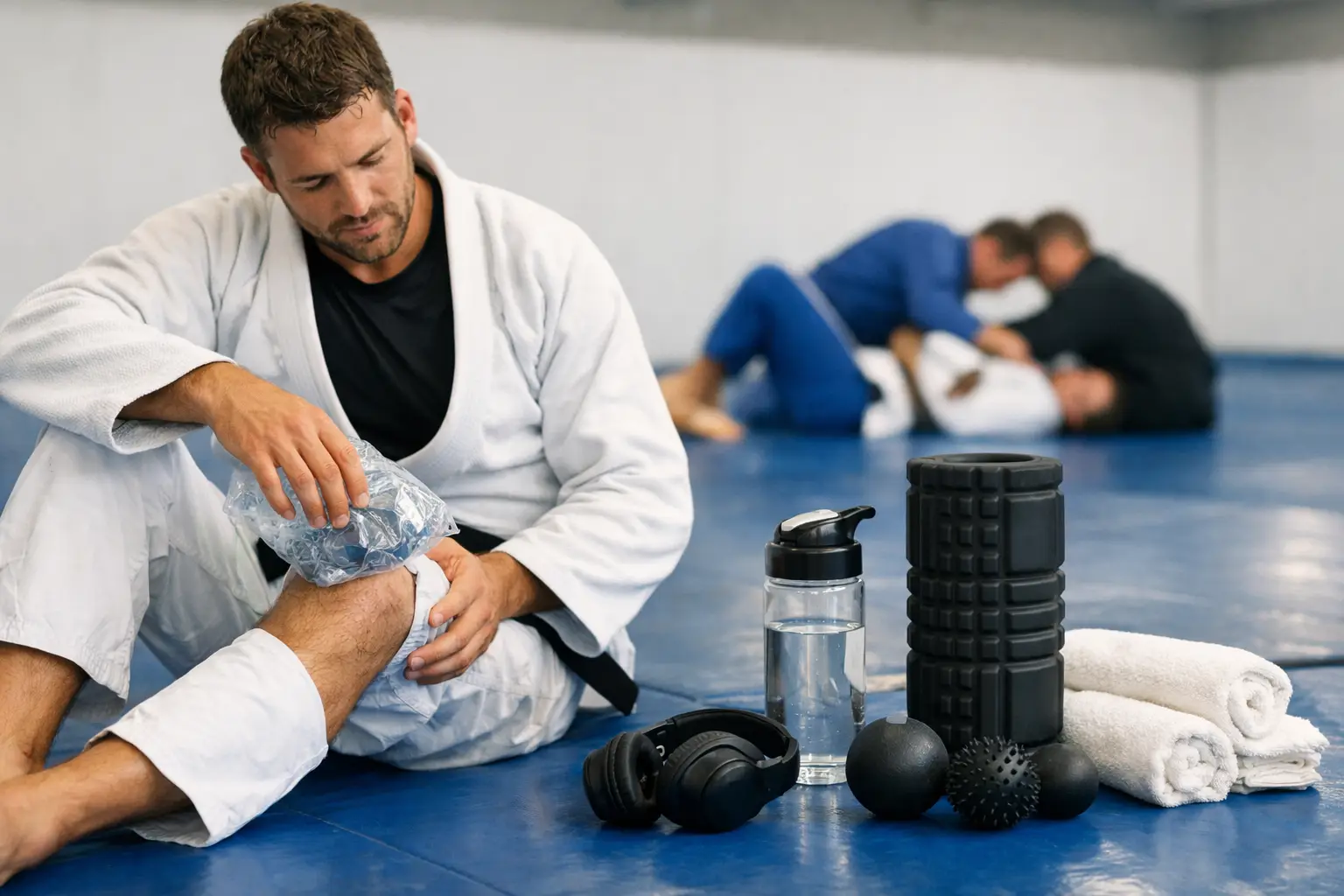
A hard round should challenge your conditioning, not leave you too beat up to train well for the next three days. A useful BJJ recovery protocol is not a collection of expensive gadgets or a single rest day after open mat. It is the system that lets you absorb takedowns, guard retention, pressure passing, scrambling, lifting, and conditioning work without letting accumulated fatigue turn into stalled progress or a preventable injury.
For grapplers, recovery has to match the actual cost of the sport. Your forearms may be smoked from grips while your elbows feel irritated. Your neck may be stiff after wrestling. Your hips, knees, and low back may be carrying fatigue from guard work and awkward transitions. The answer is not always to do less. It is to make better decisions about what to train, when to push, and when to restore capacity.
What a BJJ Recovery Protocol Needs to Solve
BJJ creates a different fatigue profile than a standard gym program. Rounds demand repeated high-output efforts, long isometric contractions, rotation, flexion, pulling, bracing, and the ability to keep moving under another person’s weight. You also cannot fully control the intensity of every session. One technical class can become a hard night when the room is full of competitors preparing for an event.
That variability is why recovery cannot be based on a rigid rule like “take every Sunday off.” Instead, manage your total training stress across the week. That includes live rounds, drilling pace, strength sessions, conditioning, sleep, work stress, and any pain that is changing how you move.
A strong recovery system does four jobs: it restores energy, keeps joints and tissues moving well, maintains strength and movement quality, and gives you a clear way to adjust training before fatigue becomes a setback.
Start With Your Daily Readiness
You do not need a lab to recognize when your body is not ready for another hard session. Use a short check-in before class or training. Notice your sleep quality, resting soreness, mood, motivation, joint stiffness, and whether your usual warm-up movements feel unusually heavy or restricted.
The key is to look for patterns, not one bad day. A poor night of sleep does not automatically require a full rest day. But poor sleep combined with a nagging elbow, low motivation, and a warm-up that feels flat is useful information. That may be the day to drill, work from controlled positions, or perform an easier strength session instead of chasing hard rounds.
Think in three practical categories. On green days, you feel normal and can train as planned. On yellow days, you are functional but carrying fatigue, so reduce either volume or intensity. On red days, pain, illness, severe sleep loss, or unusually high fatigue changes your movement and decision-making. Rest, seek appropriate medical guidance when needed, or choose low-intensity recovery work.
This approach protects long-term consistency. Missing one hard sparring session is rarely a problem. Turning a yellow day into a red week often is.
Build Recovery Into Your Weekly Training Layout
Your training week should create room for hard work to actually produce adaptation. For many committed recreational grapplers, two to three strength sessions and three to five BJJ sessions can work well. The exact number depends on training age, class intensity, competition goals, injury history, sleep, and life outside the academy.
Avoid stacking your highest-demand sessions without a reason. A heavy lower-body strength workout followed by an all-out wrestling class may be appropriate in a focused competition phase, but it carries a cost. If you do pair them, plan the following day accordingly. Do not casually add hard conditioning on top because it feels like you should do more.
A more sustainable setup places your hardest strength work away from your hardest rolling when possible. For example, use a strength-focused day after a lighter technical class, then place high-intensity rounds on a separate day. If your schedule forces same-day training, lift before BJJ when strength development is the priority, or keep the lift short and submaximal when the mat session is the main event.
Your recovery protocol should also include a lower-stress day every week. That does not mean lying still all day. Easy walking, zone-two aerobic work, controlled mobility, and light drilling can improve circulation and help you arrive at the next hard session with better movement quality.
Sleep Is Your Highest-Value Recovery Tool
No supplement, massage gun, or cold plunge can compensate for routinely short sleep. Sleep is where you restore nervous system readiness, regulate appetite, support tissue repair, and consolidate the motor learning that makes technical training stick.
Most grapplers should target seven to nine hours per night, with the higher end becoming more valuable during hard training blocks, competition preparation, or periods with multiple weekly sessions. Consistency matters. Keeping your wake time reasonably stable often does more than trying to recover an entire week of poor sleep with one long weekend morning.
Make the last hour before bed work for your training. Reduce bright screens if they keep you alert, eat enough after evening class, hydrate without chugging so much that you wake repeatedly, and give your body time to downshift. If late-night training leaves you wired, a short walk, a warm shower, and a few minutes of slow breathing can be more useful than scrolling in bed.
Fuel the Work You Want to Recover From
Underfueling is common among BJJ athletes, especially those trying to stay in a weight class or maintain a lean look. The problem is that hard rounds run on available energy. When carbohydrate intake is too low for your workload, your training quality drops, soreness lingers, and high-intensity sessions become harder to repeat.
Start with reliable meals rather than chasing perfect nutrition. Include protein at each meal to support muscle repair, and use carbohydrates around hard BJJ, strength, and conditioning sessions. Rice, potatoes, oats, fruit, bread, and other familiar foods can help restore glycogen after demanding work. The right amount depends on body size, total activity, and whether you are deliberately managing body weight.
Hydration matters more than most athletes realize, particularly in hot academies. Begin class hydrated, drink during longer sessions, and replace fluids afterward. If you sweat heavily or train for extended periods, electrolytes can be useful. A simple indicator is whether your urine is consistently very dark and whether you regularly finish training with headaches, cramping, or a major drop in energy.
Restore Movement Without Turning Recovery Into Another Workout
Recovery mobility should address the positions BJJ repeatedly loads: hips, thoracic spine, shoulders, neck, ankles, and wrists. The goal is not to force extreme ranges of motion. It is to maintain usable range, control, and comfort in the movements your game demands.
After training, five to 10 minutes is enough for most athletes. Use relaxed breathing, light neck and shoulder movement, hip rotations, controlled spinal motion, and easy wrist or forearm work. Keep it restorative. If stretching turns into an aggressive pain contest, it is no longer serving recovery.
On non-sparring days, low-intensity aerobic work can be especially valuable. A 20- to 40-minute easy bike ride, incline walk, row, or similar effort builds an aerobic base without adding excessive joint stress. It also supports the recovery between rounds that every grappler wants. You should be able to breathe through your nose or speak in full sentences for most of the session.
Use Strength Training to Make Recovery More Durable
Strength training is not separate from recovery. Properly programmed, it builds the tissues that help you tolerate BJJ volume: stronger legs for takedown exchanges, more resilient shoulders for posting and framing, trunk strength for pressure and scrambling, and better pulling capacity for grips and control.
The mistake is treating every gym session like a test. Train with enough effort to progress, but leave room to recover for the mat. During weeks with hard sparring, reduce accessory volume before removing the major movements that maintain strength. If your elbows are irritated, swap a grip-heavy pull variation for a more joint-friendly option rather than forcing the same exercise through pain.
This is where personalized programming matters. MatFlow organizes strength, conditioning, exercise alternatives, and training phases around BJJ demands, so your off-mat work can adapt to hard rolling weeks, injury limitations, and performance goals instead of competing with them.
Know the Difference Between Soreness and a Warning Sign
General muscle soreness, mild stiffness that improves as you warm up, and temporary fatigue are normal parts of training. Sharp pain, swelling, joint instability, numbness, pain that worsens during a session, or symptoms that change your mechanics are different. Do not label those signs as toughness.
Modify early. Reduce range of motion, change the movement, avoid the aggravating position, or sit out live rounds when needed. If symptoms persist, worsen, or follow a significant injury, consult a qualified healthcare professional. A short adjustment now can prevent a problem that keeps you off the mats for months.
The best recovery protocol is the one you can repeat through real life, hard classes, work demands, and changing training goals. Build the habits that help you show up prepared, then let your readiness guide the intensity. Train smarter, protect your capacity, and give your body the resources to perform better on the mat tomorrow.