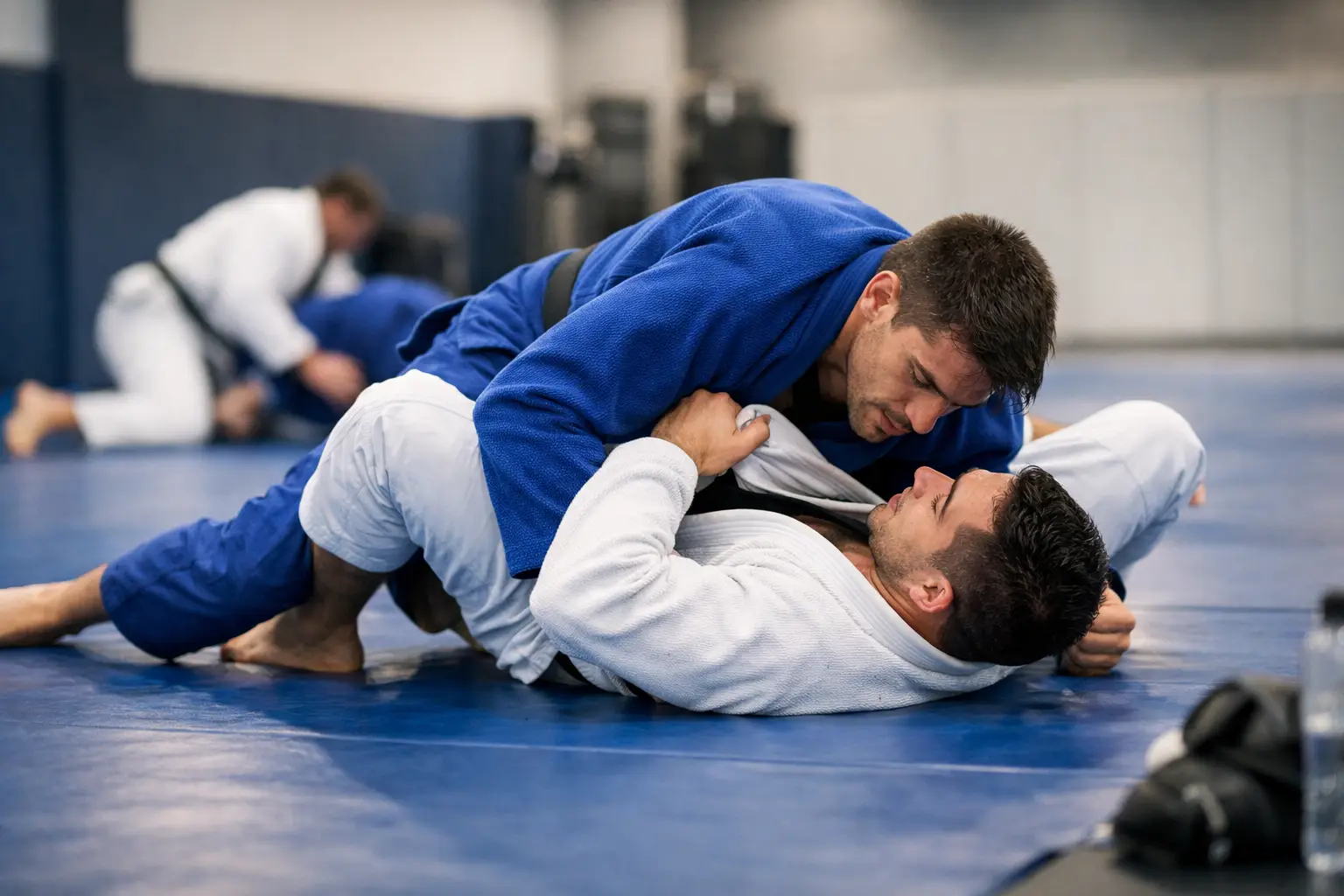
Tournament rounds expose every gap in preparation. A competitor can have sharp technique and still fade during the second hard scramble, lose posture late in a match, or arrive at weigh-ins feeling flat from a poorly timed cut. A useful BJJ competition training guide addresses more than conditioning. It organizes your mat work, strength training, recovery, and taper around the specific demands of your division, ruleset, and competition date.
The goal is not to cram in as much work as possible. It is to arrive strong, fast, durable, and confident enough to impose your game from the opening grip fight through the final exchange.
Start With the Demands of Your Match
Competition preparation should reflect the rounds you expect to fight. A five-minute match with short rest periods demands repeated high-output efforts, rapid recovery between exchanges, and enough aerobic capacity to keep making sound decisions under fatigue. Longer adult black belt rounds, open-weight divisions, and tournaments with several matches require a deeper endurance base and tighter recovery management.
Your game matters too. A pressure passer who drives through half guard needs strong legs, hips, trunk stiffness, and the ability to maintain force over time. A guard player who wrestles up needs explosive entries, single-leg strength, and resilient knees. An athlete who attacks from closed guard needs hip mobility, pulling endurance, and strong adductors without sacrificing positional control.
Do not copy a teammate's plan simply because they compete often. Training volume that helps a 22-year-old full-time athlete may bury a 38-year-old practitioner balancing work, family, and four evening classes per week. The best plan fits your actual recovery capacity.
Build Your BJJ Competition Training Plan in Phases
A competition camp works best when it has a clear progression. Instead of treating every week as an all-out effort, build physical qualities in sequence and shift the emphasis as the event gets closer.
Eight to 12 weeks out: Build capacity and strength
Early in camp, develop the base that lets you tolerate harder training later. Keep your BJJ technical work consistent, add positional rounds with purpose, and use strength sessions to improve force production and joint resilience.
Focus on foundational patterns: squat or split squat variations, hinges, pushes, pulls, carries, trunk work, and controlled rotational training. For grapplers, unilateral lower-body work is especially valuable because shots, passing steps, stand-ups, and balance recovery rarely happen from a perfectly symmetrical stance.
This is also the right time to address limitations. If your shoulders become irritated after heavy grip fighting, build pressing and pulling strength with ranges and angles you can tolerate. If your knees object to deep loaded squats, use split squats, step-ups, sled work, or a pain-free range while you improve tissue capacity. Injury-aware training is not soft training. It is how you keep building without turning a manageable issue into a forced layoff.
Four to six weeks out: Convert strength into mat-ready output
As the tournament approaches, maintain the strength you built but place more emphasis on speed, repeated effort, and competition-specific sparring. Your lifting volume usually comes down while intent stays high. A few quality work sets can maintain strength far better than exhausting yourself with accessory work that leaves you sore for hard rounds.
Explosive movements should be simple and controlled: jumps, medicine-ball throws, kettlebell swings, fast push-ups, or short sled drives. The exercise matters less than producing force quickly with clean mechanics. You do not need to chase fatigue in every conditioning session. BJJ already supplies plenty of fatigue.
Use your hardest rounds strategically. Schedule competition-style rounds one or two days each week, depending on your experience, class schedule, and recovery. Start from likely tournament scenarios: a tight grip exchange, your preferred guard, a bad position you must escape, or the final minute while protecting a lead. Give each round a tactical objective rather than turning every session into random gym wars.
The final 10 to 14 days: Sharpen, do not punish
The biggest late-camp mistake is trying to get fitter during the final week. You will not create a new engine in seven days, but you can easily carry fatigue, inflammation, and poor sleep into competition.
Reduce total training volume while preserving a small amount of intensity. Keep movement crisp. Perform a few fast drills, short high-quality rounds, and brief strength sessions that leave you feeling better than when you walked in. Avoid testing max lifts, adding unfamiliar exercises, or taking unnecessary punishment from teammates who have nothing on the calendar.
A good taper leaves some athletes restless because they are used to feeling crushed after training. That is not a problem. Freshness is part of performance.
Balance Mat Training and Strength Work
For most committed recreational competitors, two full-body strength sessions per week are enough during camp. Three can work if your mat volume is moderate, sleep is reliable, and you have experience recovering from it. One session may be appropriate during the final taper or during weeks with multiple hard sparring sessions.
Place your most demanding strength session away from your hardest live rounds when possible. If you must double up, lift before technical drilling or separate sessions by several hours. Avoid a heavy lower-body session the day before hard takedown rounds if sore legs will change your movement and increase injury risk.
Track the signals that matter: sleep quality, resting soreness, grip fatigue, mood, joint irritation, and whether your speed is disappearing during warm-ups. A missed accessory lift is not a setback. Grinding through a session when your body is clearly under-recovered can cost you several productive days.
Train Conditioning Without Emptying the Tank
BJJ conditioning has two jobs. First, it builds the aerobic base that helps you recover between scrambles, rounds, and matches. Second, it prepares you to repeat high-output efforts without losing posture, timing, or composure.
Low-intensity work is often underused because it does not feel dramatic. Easy cycling, incline walking, rowing, or light jogging for 25 to 45 minutes can improve recovery capacity without adding much joint stress. Keep it conversational. If you cannot breathe through your nose for portions of the session or speak in full sentences, it may be too hard for base work.
Hard conditioning should complement your live training, not duplicate it blindly. If you already complete several intense sparring sessions each week, add only a small amount of structured interval work. Short sled pushes, assault bike intervals, or circuit-style efforts can help, but the dose depends on your current mat load. More is not automatically better.
Make Weight Without Sacrificing Your Game
If you are close to a weight class, gradual bodyweight management beats a last-minute drastic cut. Begin early enough to make small nutritional adjustments while maintaining training quality. Severe dehydration can damage endurance, decision-making, grip strength, and your ability to absorb the stress of a long tournament day.
Know the event's weigh-in timing before making any plan. Same-day weigh-ins leave little room to rehydrate and refuel, so competing near your natural weight is usually the smarter call. Day-before weigh-ins change the equation, but aggressive cuts still carry risks and should not be your first strategy.
Practice your competition-day meals during hard training days. Find foods that sit well, provide carbohydrate, and do not create digestive problems. Tournament day is not the time to experiment with stimulants, supplements, or a massive breakfast you have never tested.
Prepare the Details That Save Energy
Competition readiness is not only physical. Decide your first gripping sequence, your preferred opening attack, and your response when the match stalls. Review the rules for your division, especially scoring, legal submissions, reaping restrictions, and out-of-bounds procedures. A preventable penalty or a missed scoring opportunity can erase months of preparation.
Create a simple warm-up that raises your temperature without draining you: joint movement, light locomotion, a few explosive actions, technical drilling, and short bursts that resemble your first exchange. You should feel alert and ready to engage, not sweaty and exhausted before your name is called.
Use the same preparation process across camp whenever possible. MatFlow helps athletes organize phased strength and conditioning, adapt sessions around limitations, and track progress so training decisions are based on more than guesswork.
Your competition plan should make you more capable on the mat, not merely more tired in the gym. Build the base early, sharpen the qualities your game demands, and taper with enough discipline to step onto the mats ready to use everything you built.