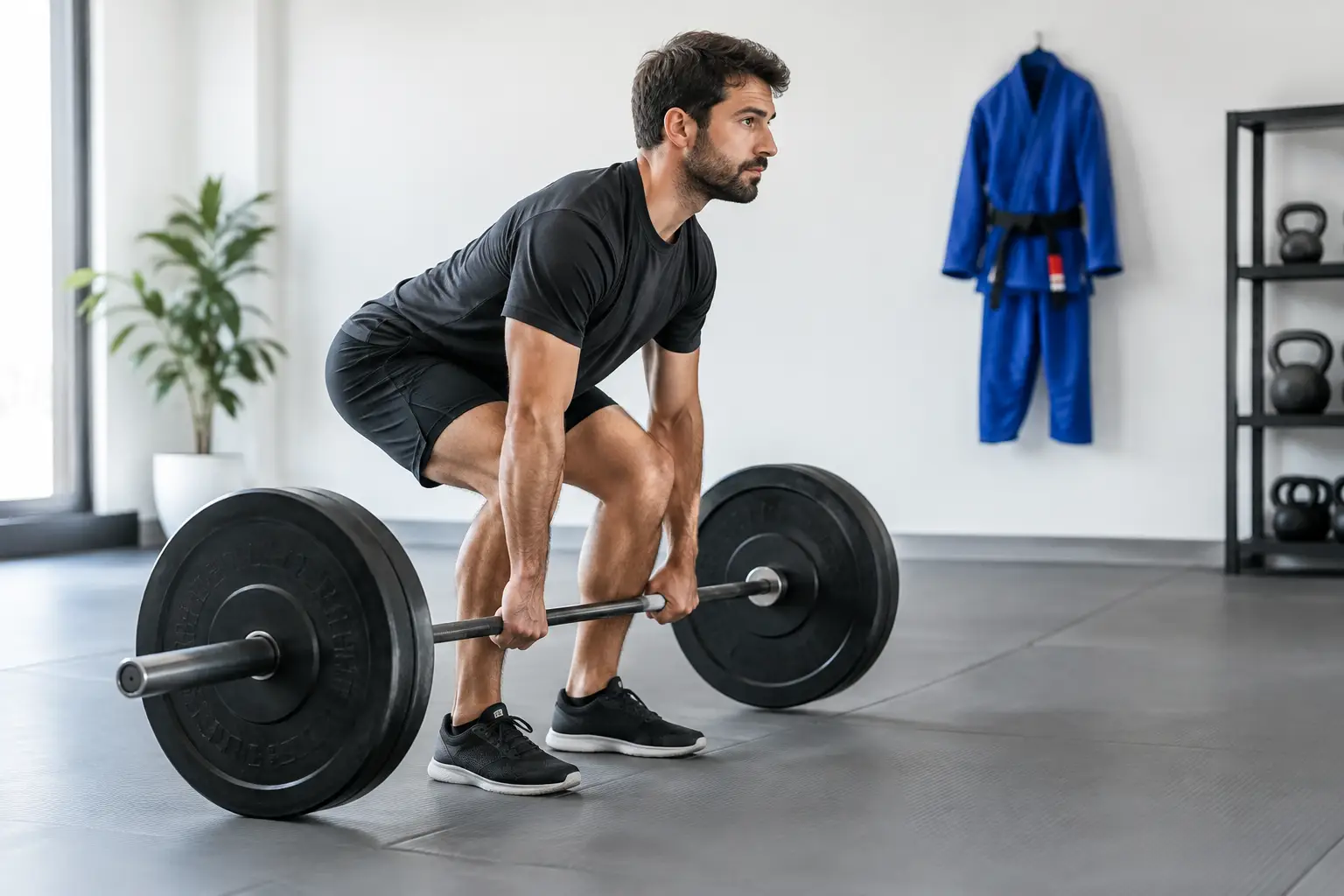
A hard sprawl, a powerful bridge escape, a clean double-leg finish, and the ability to keep driving late in a round all rely on the same engine: your posterior chain. The best posterior chain exercises for BJJ develop the glutes, hamstrings, spinal erectors, and upper back so you can produce force from awkward positions, resist being folded, and recover your posture under pressure.
For grapplers, posterior-chain work is not about chasing a bodybuilding pump or loading barbell lifts for their own sake. It is about building hips that extend violently, hamstrings that protect the knee, a back that holds position, and enough capacity to repeat those efforts across rounds. The right choices depend on your training age, equipment, injury history, and how hard you are rolling that week.
Why BJJ Athletes Need a Strong Posterior Chain
BJJ puts your hips and back to work in positions that are rarely symmetrical or controlled. You are bridging under mount, standing from seated guard, pulling opponents into your hips, resisting a stack pass, and scrambling from one compromised angle to another. Weakness in the posterior chain often shows up as slow hip escapes, a rounded lower back during takedowns, fading posture in closed guard, or hamstring and low-back irritation after hard sessions.
A stronger posterior chain improves force transfer from the floor through your hips and torso. That matters when you shoot, lift, drive, frame, or create separation. It also gives you more positional endurance. You may not notice a single dramatic rep on the mat, but you will notice that maintaining a base and rebuilding your posture costs less energy.
The goal is not to hammer every posterior-chain pattern in every workout. A well-built plan usually includes one heavier hip hinge, one hamstring-focused movement, one unilateral lower-body exercise, and upper-back work. Add power work when your technique and recovery support it.
8 Best Posterior Chain Exercises for BJJ
1. Romanian Deadlift
The Romanian deadlift is one of the most useful strength exercises for BJJ because it trains loaded hip hinging without requiring a pull from the floor. It builds the hamstrings, glutes, and trunk stiffness needed to keep your hips engaged when wrestling, passing, or resisting pressure.
Use a barbell, dumbbells, kettlebells, or even a band depending on your setup. Keep the load close, push your hips back, and stop the descent when you can no longer maintain a neutral, braced torso. For most grapplers, two to four sets of five to eight controlled reps is enough. Avoid turning it into a fatigue contest the day before hard sparring.
2. Trap-Bar Deadlift
The trap-bar deadlift is a strong option for athletes who want full-body strength and explosive leg drive with a more upright position than a conventional barbell deadlift. That can make it easier to learn and, for some athletes, more comfortable to load around a history of back irritation.
It carries over well to takedown finishes, lifts, and driving through an opponent. Start each rep from a dead stop, brace before you push, and stand with intent. Heavy sets of three to five reps are effective in a strength phase, but only if they do not leave you too sore or fatigued to train BJJ well.
3. Barbell Hip Thrust
Hip thrusts load hip extension directly. That makes them valuable for bridges, explosive stand-ups, and finishing movements where your glutes need to produce force quickly. They are also useful when you need a lower-body strength option that creates less spinal loading than repeated heavy hinges.
Pause briefly at lockout rather than overextending your lower back. If a barbell setup is unavailable, single-leg glute bridges, banded hip thrusts, and elevated glute bridges provide practical alternatives. Higher rep ranges of eight to 12 work well here, especially during periods with a lot of mat volume.
4. Nordic Hamstring Curl
The Nordic hamstring curl is demanding, but its eccentric hamstring emphasis is worth earning. Strong hamstrings help control knee position, decelerate scrambles, and support the posterior chain when you are sprawled or working from extended-leg guard positions.
Most athletes should begin with assisted repetitions using a band, a raised hand position, or a shortened range of motion. Lower under control, catch yourself with your hands, and use assistance on the way back up. Two or three sets of three to six quality reps are plenty. Excessive soreness can interfere with guard retention and movement, so progress slowly.
5. Single-Leg Romanian Deadlift
BJJ is full of staggered stances, uneven pressure, and one-leg loading. The single-leg Romanian deadlift develops hip control, hamstring strength, and balance in a way bilateral lifting cannot fully replace. It is particularly useful for grapplers who collapse at the hip during shots, sprawls, or standing exchanges.
Begin with a light dumbbell or bodyweight. Keep your hips square to the floor and move slowly enough that balance is earned rather than faked. Sets of six to 10 reps per side work well as an accessory after a primary lift or as part of a lower-impact training day.
6. Back Extension
Back extensions train the glutes, hamstrings, and spinal erectors while allowing you to adjust the challenge precisely. They are a practical answer for athletes who need more posterior-chain volume but cannot recover from additional heavy deadlifting.
On a 45-degree bench, think about moving through the hips instead of repeatedly bending and straightening the low back. Hold a dumbbell once bodyweight sets become easy. This exercise fits well for eight to 15 reps and can build the endurance needed to stay structurally sound through long rounds.
7. Kettlebell Swing
The kettlebell swing teaches rapid hip extension and posterior-chain power. Done well, it reinforces the snap of the hips used in shots, bridges, and explosive transitions. Done poorly, it becomes a squat-and-arm raise that adds fatigue without the intended benefit.
Use a crisp hinge, keep the bell close to the body, and stop each set when your power drops. Swings are best placed early in a workout for sets of six to 15 reps, with enough rest to keep every rep sharp. They are not mandatory if you already have explosive lifting in your program, but they are an efficient option for home training.
8. Chest-Supported Row
Your upper back is part of the posterior chain and matters every time you fight for posture, pull an opponent close, or resist being broken down. A chest-supported row lets you load the lats, rhomboids, rear delts, and mid-back without asking your lower back to stabilize another bent-over position.
Pull with control, pause briefly at the top, and avoid shrugging toward your ears. Two to four sets of eight to 15 reps pair well with lower-body training. If your gym setup is limited, inverted rows, ring rows, or band rows can fill the same role.
How to Program Posterior Chain Work Around BJJ
The best posterior chain exercises BJJ athletes choose still need the right dose. Training them two times per week is enough for most practitioners. One day can emphasize strength with a trap-bar deadlift or Romanian deadlift, followed by rows and a hamstring accessory. A second day can use hip thrusts, single-leg work, back extensions, and a power movement such as swings.
Your rolling schedule should control the volume. If you have hard takedown rounds on Tuesday and competition class on Thursday, avoid placing heavy hinges the night before both sessions. Train heavier after a lower-intensity mat day or give yourself 24 to 48 hours before your most demanding sparring. During a competition camp, maintain strength with fewer hard sets and prioritize speed, freshness, and technical practice.
Exercise selection should also reflect your body. A grappler with a sensitive lower back may do better with hip thrusts, split-stance work, chest-supported rows, and controlled back extensions than frequent heavy conventional deadlifts. An athlete with cranky knees may need to progress Nordics carefully while using isometric hamstring bridges first. Smart training is not avoiding challenges. It is choosing challenges you can recover from and repeat.
MatFlow organizes this process around your actual BJJ schedule, available equipment, performance goals, and injury considerations. Instead of collecting random posterior-chain exercises, you can build phased training that progresses when your body and mat workload are ready for it.
Build the strength that lets you bridge one more time, stand up with purpose, and keep your posture when the round gets difficult. The exercise matters, but the consistent, recoverable plan behind it is what carries over to the mat.